The Invisible Drinking Loop™
Why "Just Quit" Often Fails—The Invisible Loops That Keep Unwanted Drinking Patterns Alive
An unwanted drinking pattern is rarely driven by alcohol alone. While drinking is the most visible part of the pattern, it’s the invisible drinking loops beneath it that keep an unwanted drinking pattern alive.
What Is an Invisible Drinking Loop?
A Framework to Understand How an Unwanted Drinking Pattern is Formed and Maintained
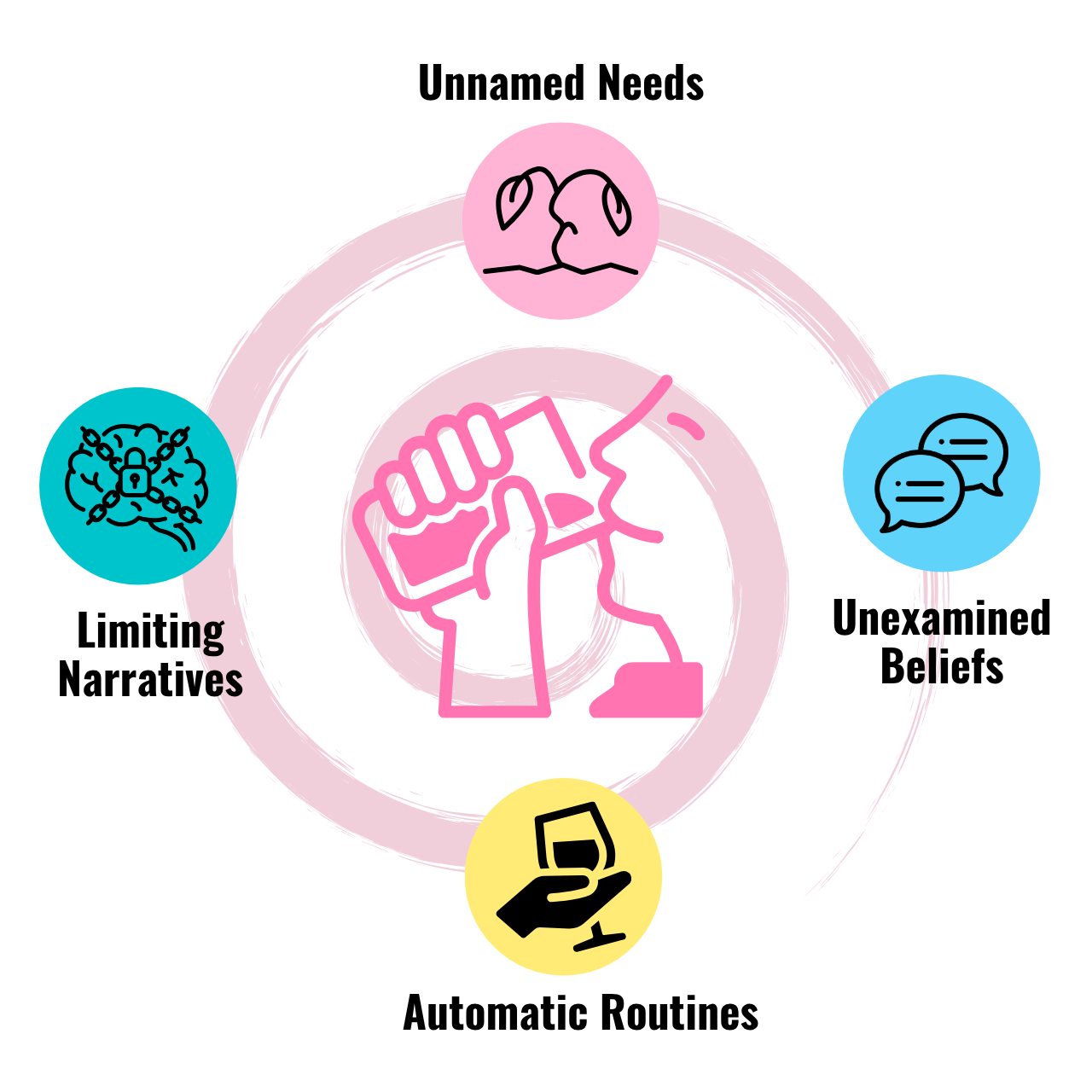
An invisible drinking loop is a recurring drinking cycle in which drinking begins as an attempt to meet an underlying need.
The cycle is fueled by a belief that alcohol can help with the need in some ways, maintained by a habit loop in which drinking is the default routine, and reinforced by narratives that often hinder growth rather than supporting change.
What Makes Up an Invisible Drinking Loop?
The Four Invisible Forces That Fuel an Unwanted Drinking Pattern
Force #1:
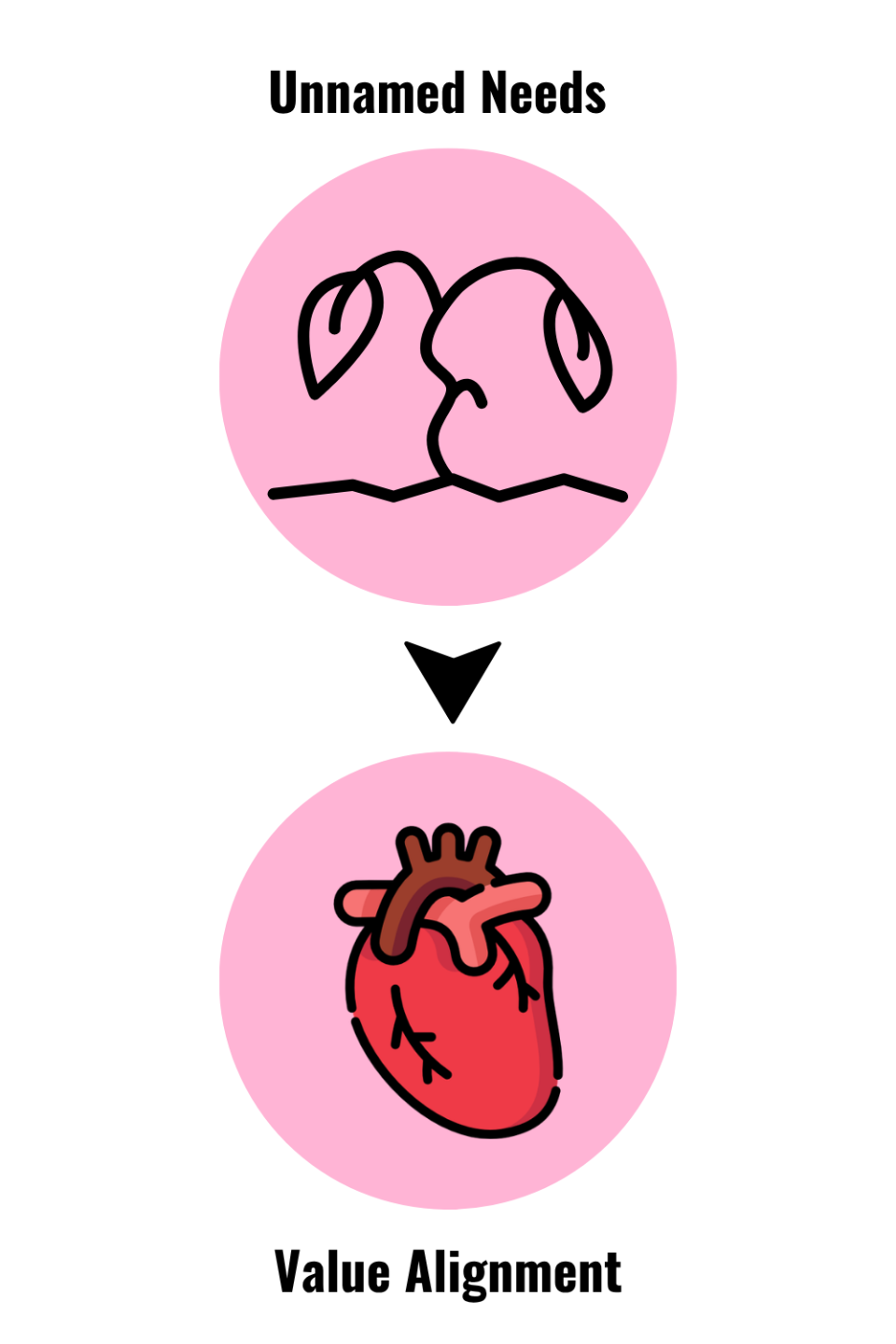
Unnamed Needs
Unnamed needs are the underlying needs that drive an unwanted drinking pattern. Drinking often starts as an attempt to meet an unmet need, whether it's seeking comfort, enhancing experience, or facilitating connection.

Force #2:
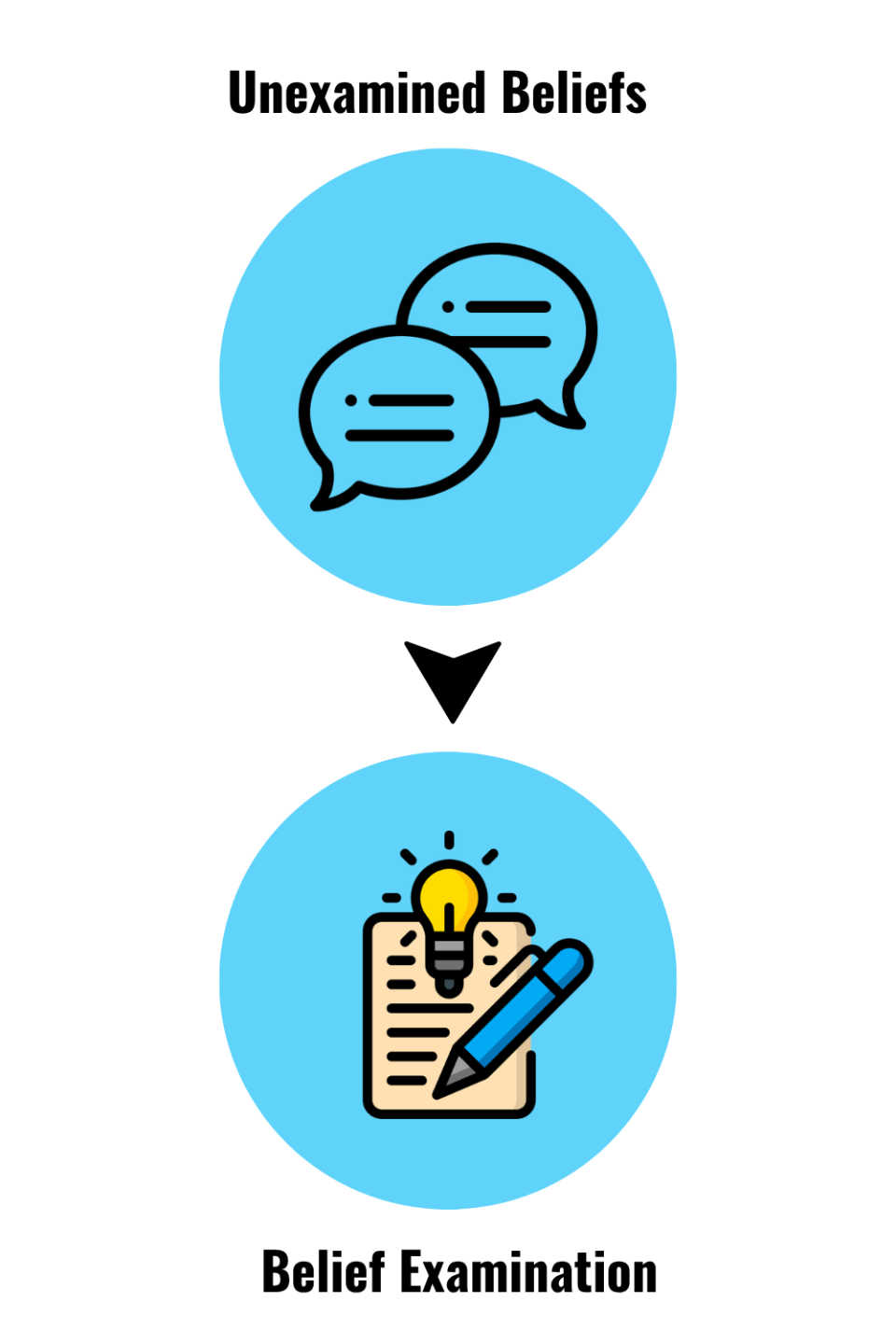
Unexamined Beliefs
Unexamined beliefs are beliefs one has formed through observation or experience about what alcohol can do for us in certain situations, such as providing comfort, enhancing experience, or facilitating connection.
Force #3:
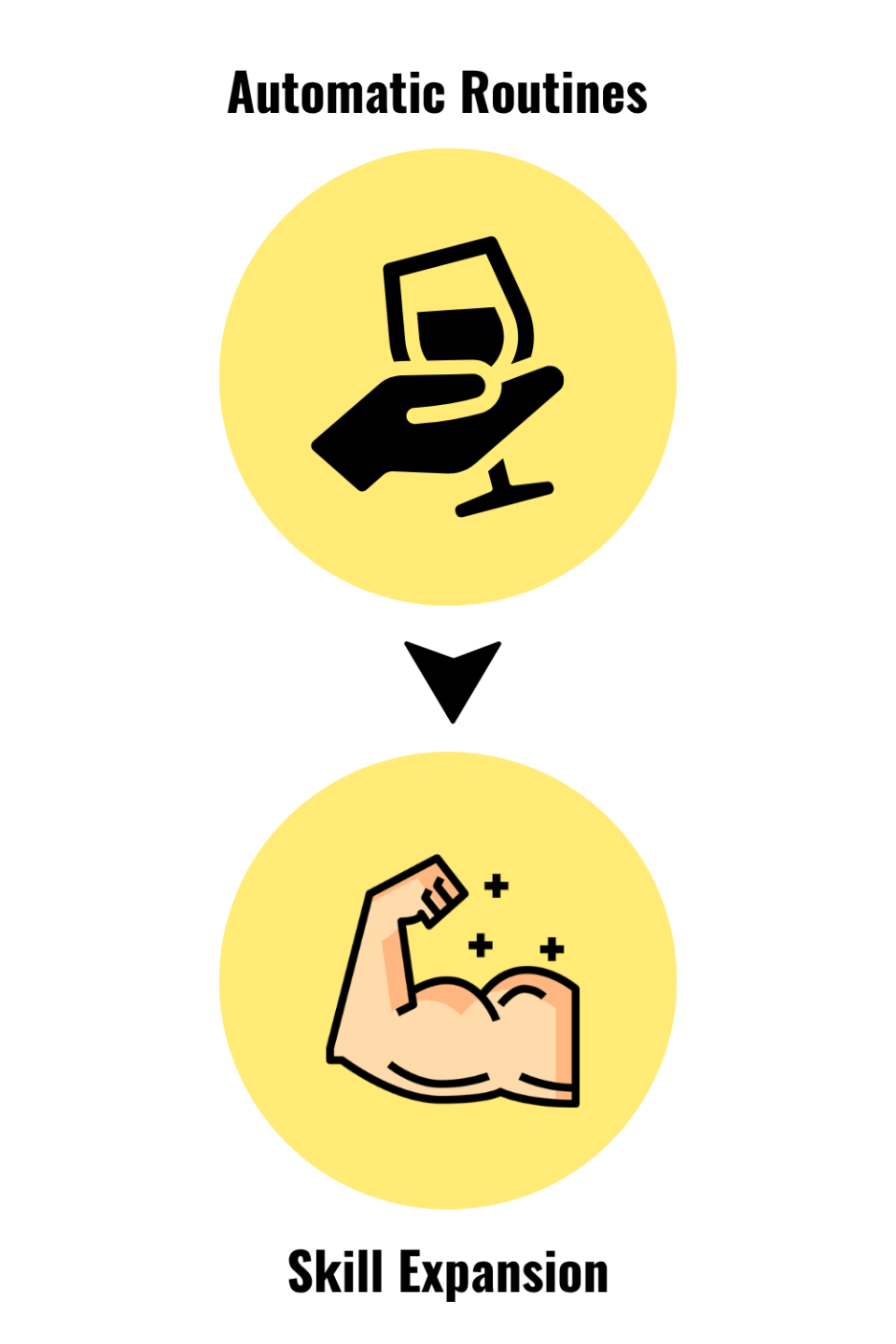
Automated Routines
Automated Routines are parts of established habit loops in which drinking is the default routine. Each habit loop is made up of a drinking cue, the drinking routine, and a desired outcome. When a drinking cue is present, the desire for the associated outcome would fuel the craving to drink.
Force #4:
Limiting Narratives
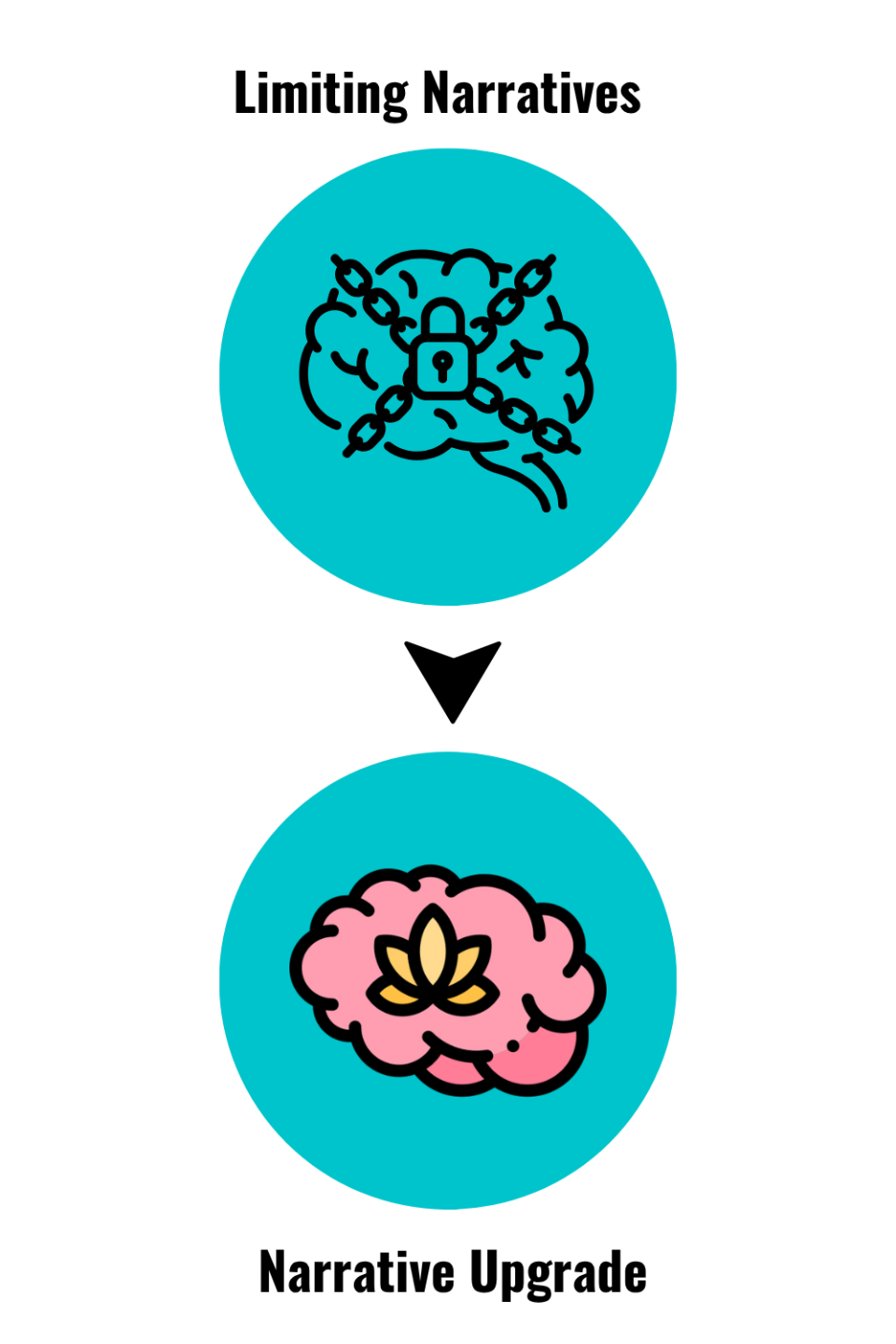
Limiting Narratives are ways a person interprets themselves, their relationship with alcohol, and their ability to cope or thrive without it. From a limiting narrative, the inevitable challenges one may encounter in breaking the loops are often interpreted as proof of an inability to change.
What Do These Drinking Loops Look Like in Real Life?
Examples of Common Invisible Drinking Loops
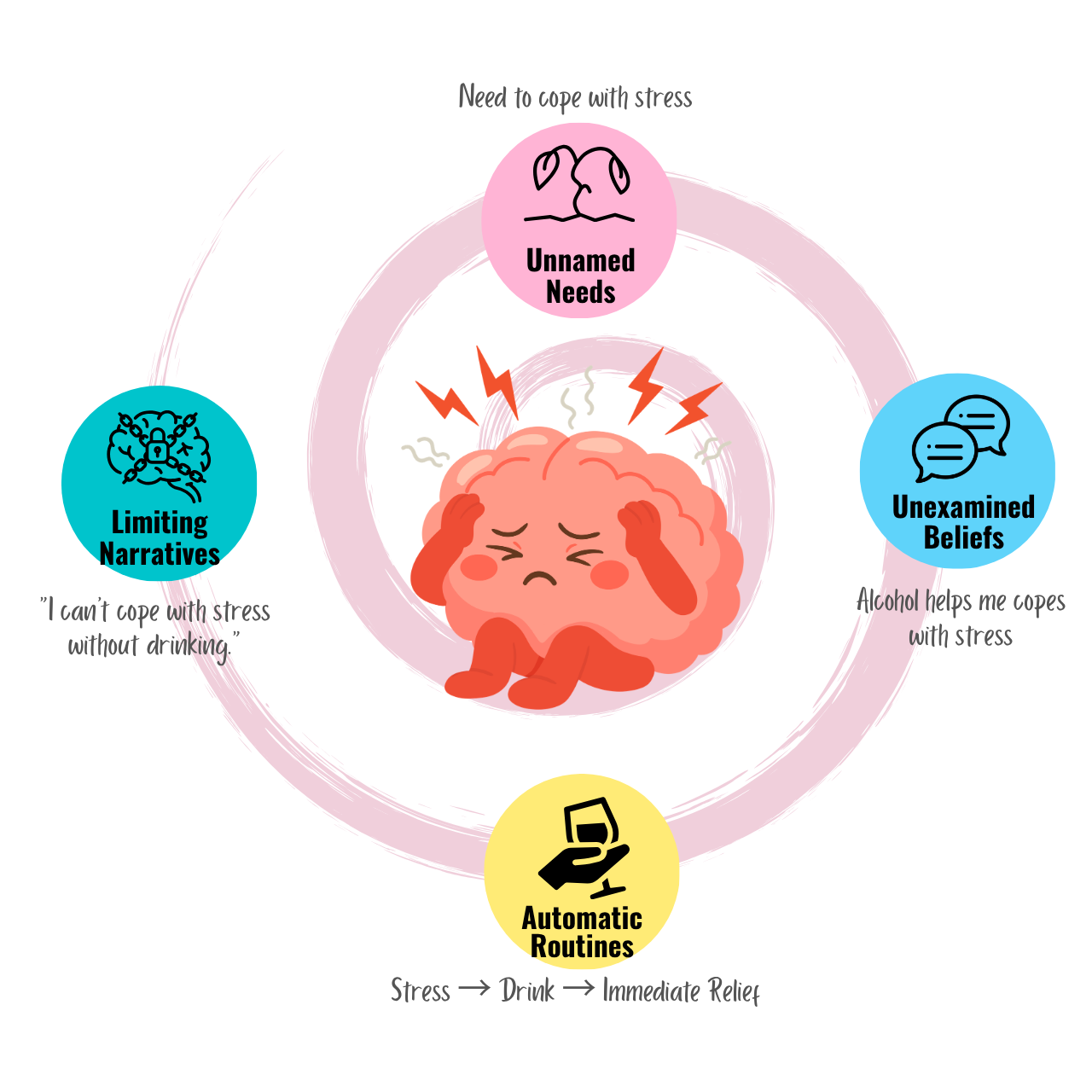
Stress-Drinking Loop
An unwanted drinking pattern is often made up of many, rather than a single, drinking loop. Each drinking loop has become a habitual response to certain events. For example, common drinking loops include:
- Stress-Drinking Loop
- Boredom-Drinking Loop
- Anxiety-Drinking Loop
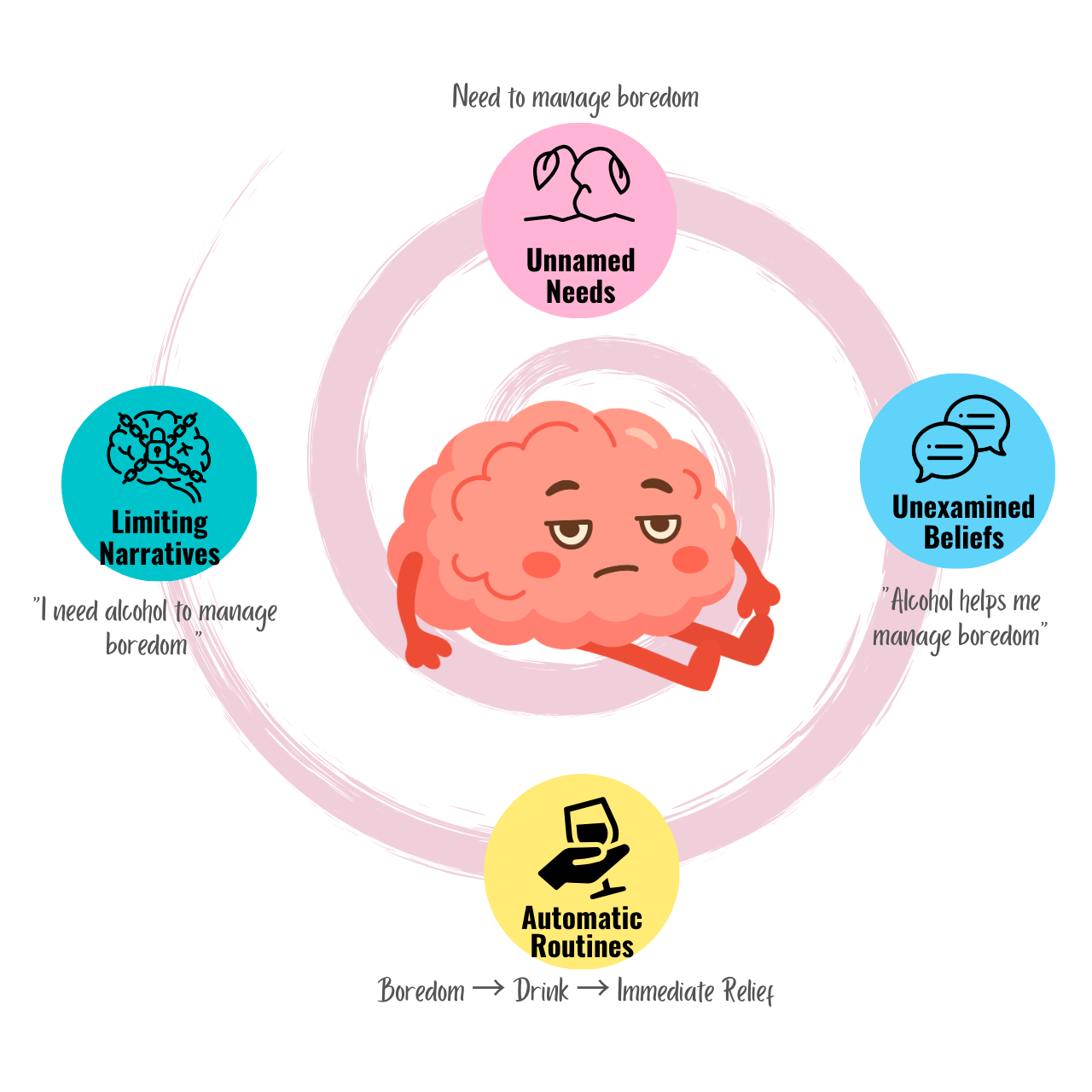
Boredom-Drinking Loop
In each drinking loop, drinking starts as an attempt to address an underlying need, whether it’s to cope with stress, to manage boredom, or to ease anxiety.
The drinking is fueled by beliefs like:
- “alcohol helps me cope with stress,”
- “alcohol helps me manage boredom,”
- “alcohol helps me ease anxiety.”
In many cases, drinking can seem remarkably effective at serving these purposes in the short run, making it an appealing choice that we naturally return to.
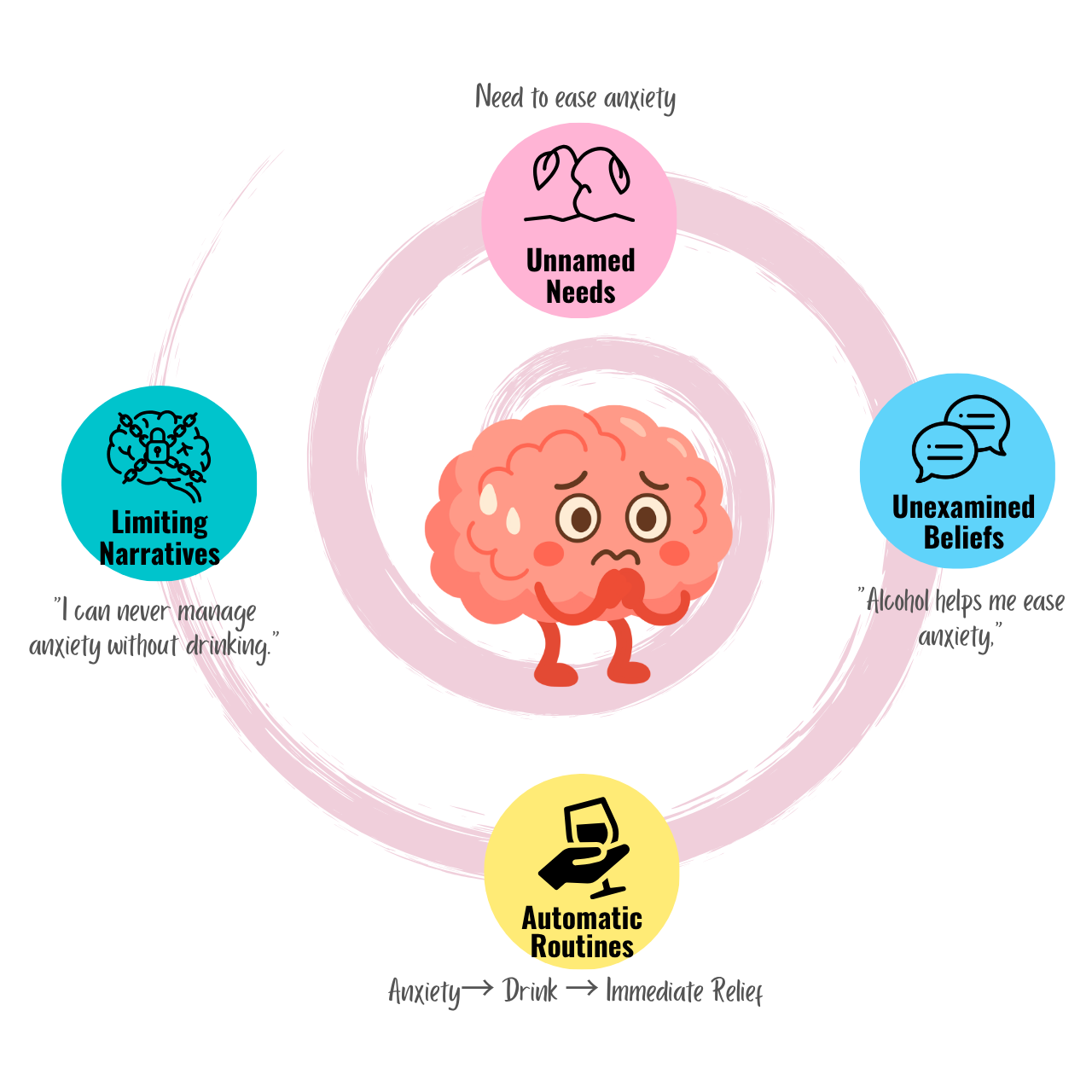
Anxiety- Drinking Loop
Through repeated use, habit loops form, in which drinking becomes the default routine for coping with stress, boredom, or anxiety.
When we attempt to break these drinking loops by simply removing alcohol, we may find ourselves lacking the tools and skills to effectively cope with stress, manage boredom, or ease anxiety.
We may then adopt narratives that mistake these struggles as proof of our inability to cope with these challenges without alcohol, such as:
- “I can’t cope with stress without drinking.”
- “I need alcohol to manage boredom.”
- “I can never manage anxiety without drinking.”
How Does the Invisible Drinking Loop Keep Us Trapped?
The Vicious Cycle When a Drinking Loop Becomes a Habitual Response
However, the problem with attempting to meet an underlying need through drinking is that while it appears to help us meet our needs in the short run, it tends to create more obstacles to meeting those same needs in the long run.
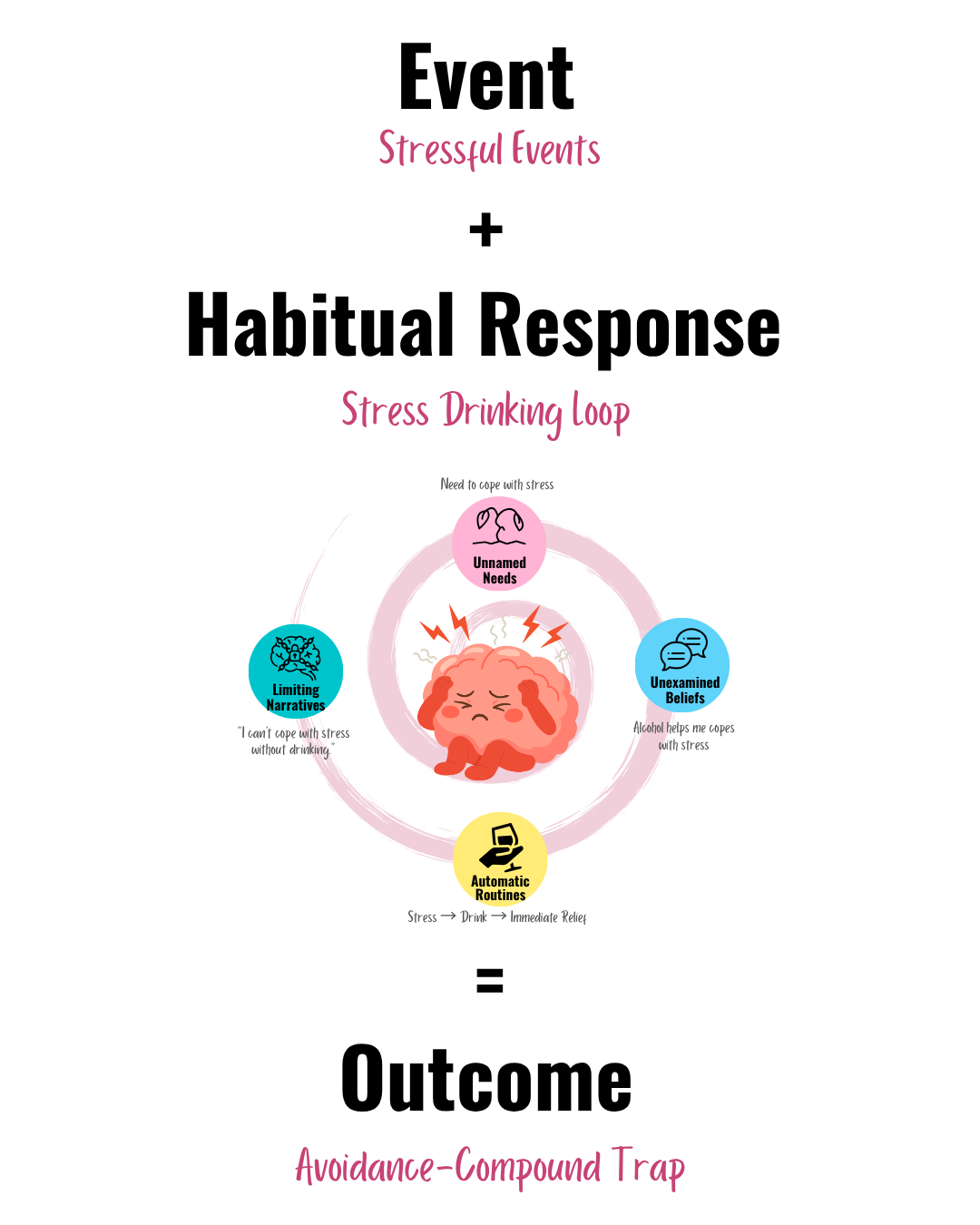
The more we drink to cope with stress, the less the stress is addressed head-on. As stress accumulates and compounds in our lives, the need to drink to cope with it grows greater.
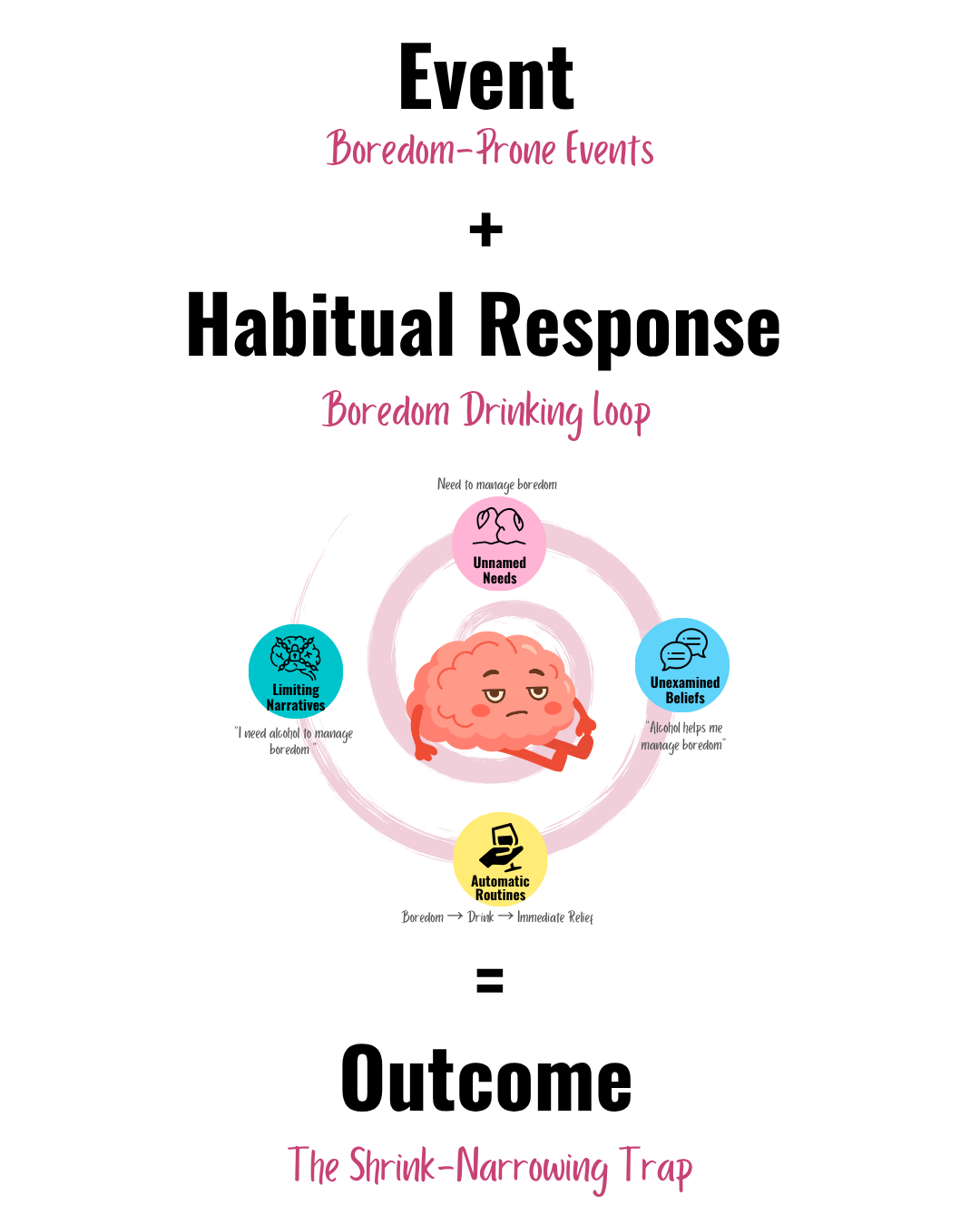
The more we drink to manage boredom, the fewer non-drinking activities we engage in. As our world shrinks and narrows, the need to drink to manage boredom grows greater.
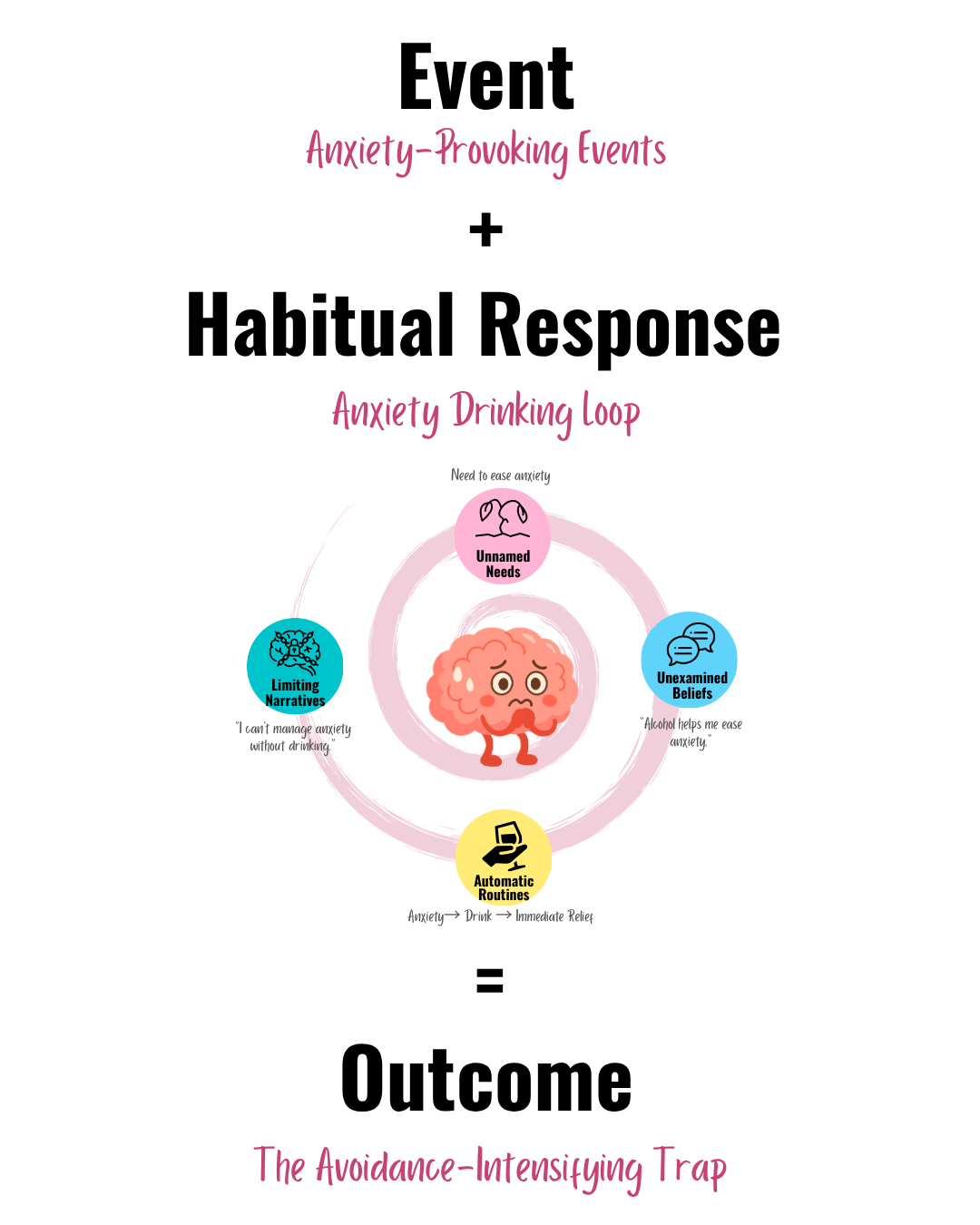
The more we drink to ease anxiety, the fewer opportunities we have to face what scares us. As we become increasingly sensitized, the need to drink to ease anxiety grows greater.
Over time, if drinking becomes our default way of coping, stress tends to compound, boredom tends to grow, and anxiety tends to intensify. Each becomes an invisible trap that keeps us in a vicious cycle: the more we drink to cope, the more we need to drink to cope.
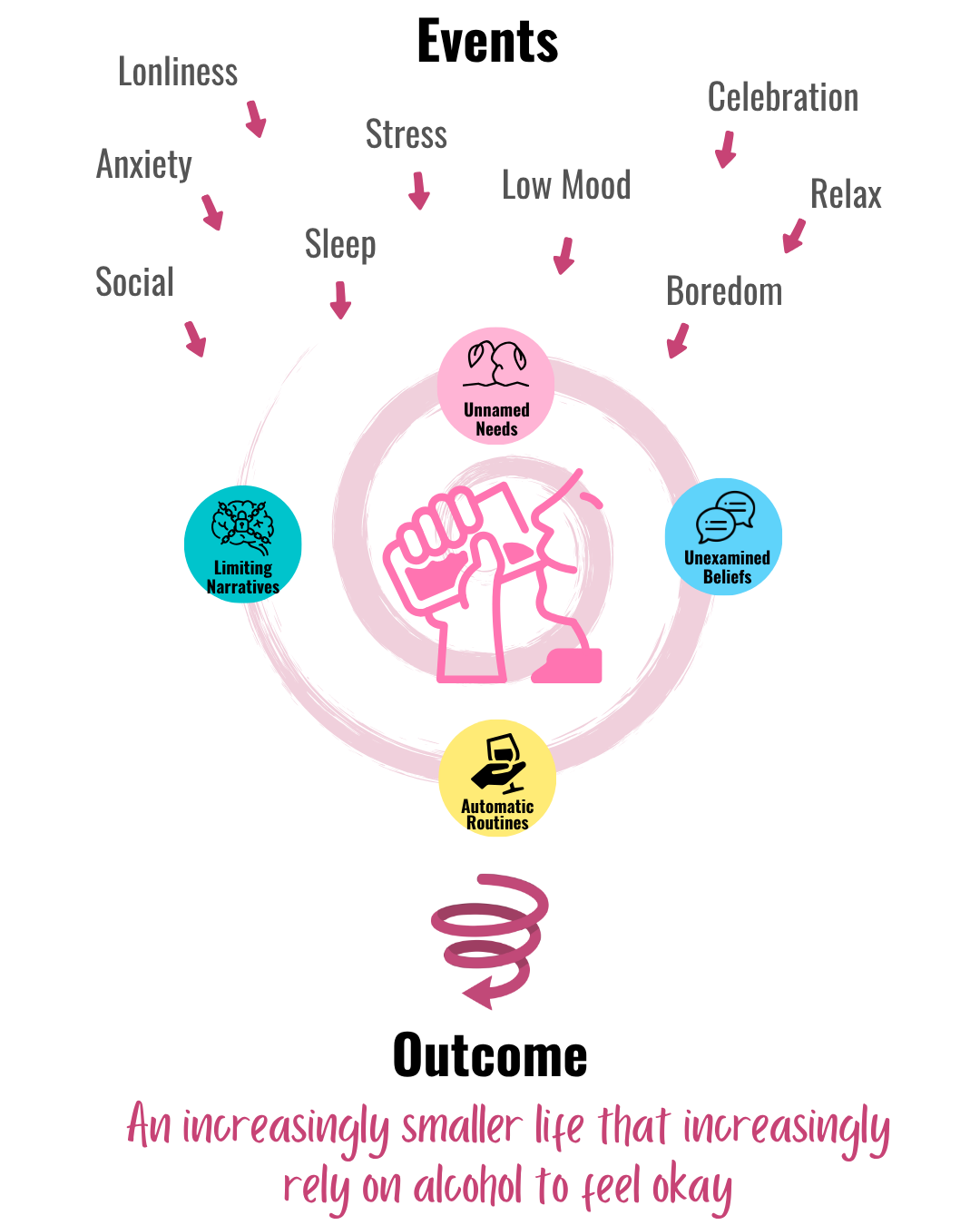
When various drinking loops become our habitual response across different areas of our lives, our world tends to shrink, the problems we drink to solve tend to worsen, and we become stuck in a vicious cycle in which drinking becomes both the solution to our problems and the source of them.
Why Is It So Hard to Break an Unwanted Drinking Pattern?
How an Unaddressed Force Continues to Keep a Drinking Loop Alive
When an unnamed need remains unacknowledged and unaddressed, it often continues to pull a person back into the same drinking pattern.
When an unexamined belief remain unnamed and unexamined, they often continue to fuel the temptation to drink, even when a person has stopped drinking.
When we attempt to break an established habit loop by simply removing the drinking routine without replacing it with a new routine, craving often persists.
When a limiting narrative is left unquestioned and unchallenged, it can diminish motivation, hinder resourcefulness, and reduce resilience.
How to Truly Outgrow an Unwanted Drinking Pattern
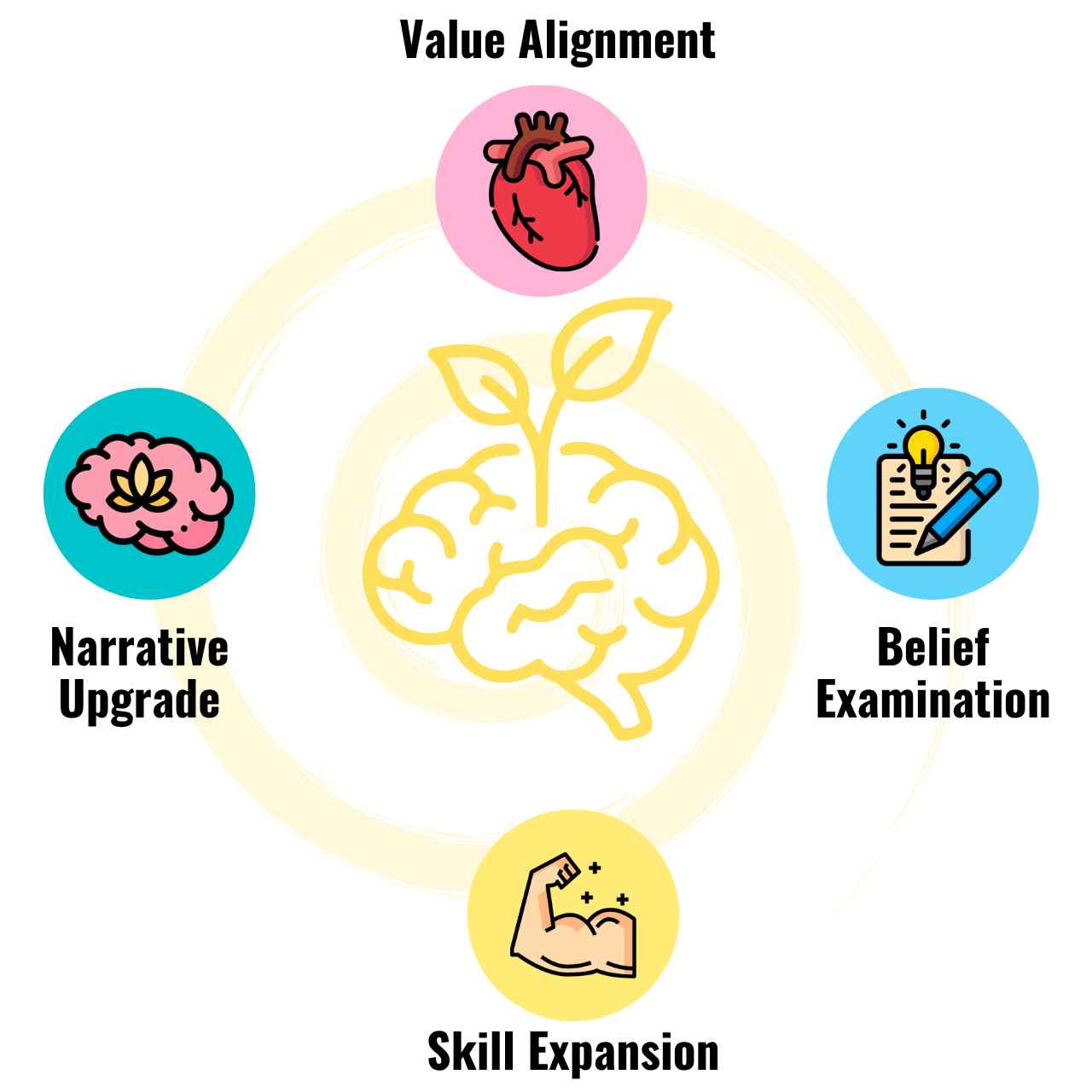
4 Forces, 4 Pillars, One Intentional Path to Growth Beyond Alcohol
Pillar #1:
Value
Alignment
Name and acknowledge the underlying needs, and explore new ways to meet those needs in ways that honor the life you want to build.
Pillar #2:
Belief Examination
Identify and examine the temptation-fueling beliefs to develop a more complete and accurate understanding of how alcohol both helps and hinders our ability to meet our needs.
Pillar #3:
Skill
Expansion
Explore and practice new tools and skills to interrupt the old drinking routines and replace them with effective routines that fulfill the same purpose.
Pillar #4:
Narrative Upgrade
Adopt a new narrative that recognizes challenges and setbacks as part of the learning process to support growth, resourcefulness, and resilience.

Ready to Outgrow Your Old Drinking Loops?
Here are three ways I can support you

Self-Study Program
Learn at your own pace with a self-guided online course.

Hybrid Program
Combine self-paced learning with occasional personalized guidance.

Private Coaching
Receive ongoing one-on-one support tailored to your unique journey.
Or, fill out this form for a personalized recommendation