Stress-Drinking Loop
A New Way to Understand Why We Drink When We Feel Stressed—and How to Break the Cycle
What Is a Stress-Drinking Loop?
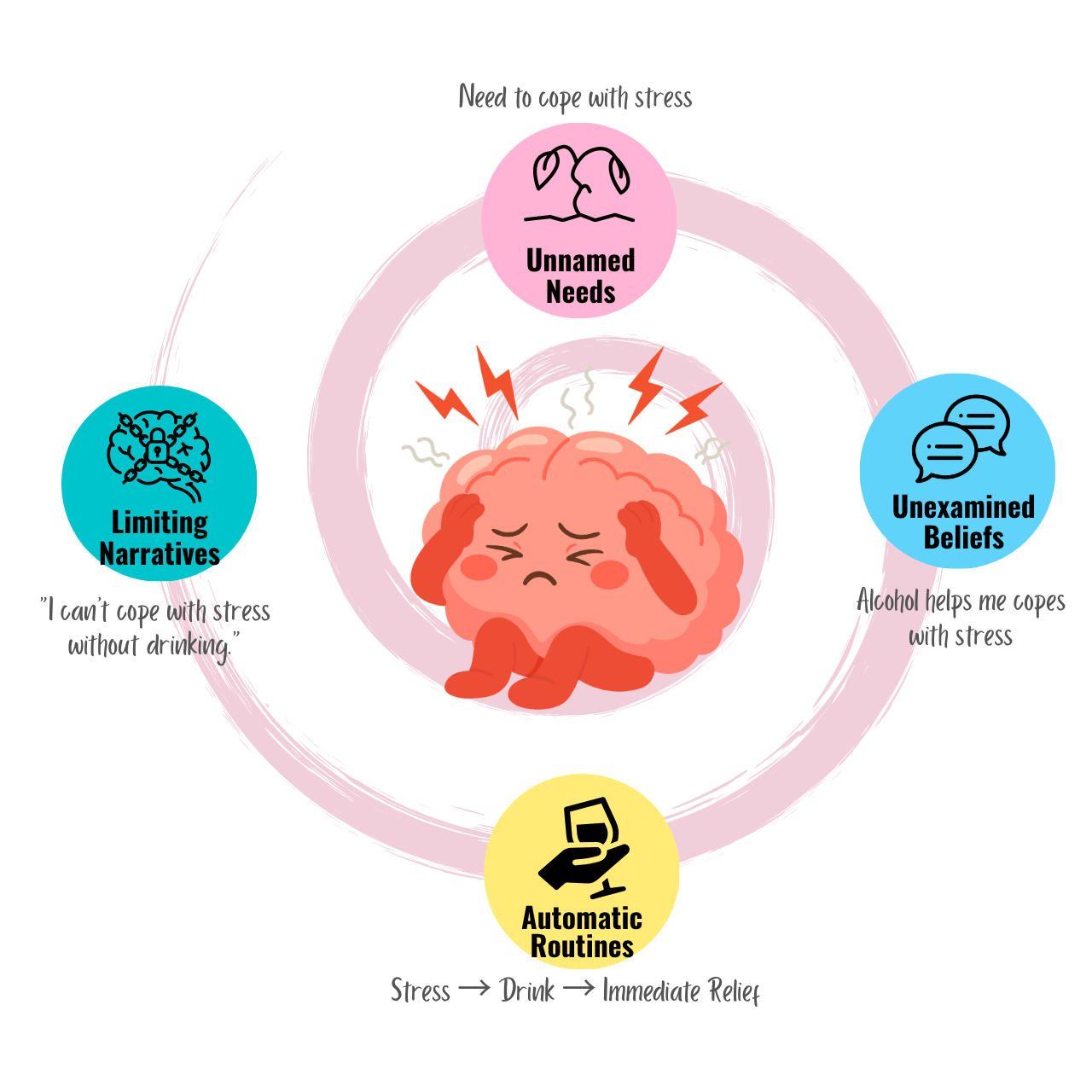
A Stress-Drinking Loop is an unwanted drinking cycle where drinking starts as an attempt to seek relief from stress, gradually becomes a default response to stressful situations, and ultimately contributes to more of the stress a person is trying to cope with.
While a stress-drinking loop often helps provide immediate relief from stress symptoms, in the long run, it often compounds the amount of stress that we originally attempt to cope with through drinking.
Over time, it perpetuates a vicious cycle where the more we drink to cope with stress, the more the stress grows, and the more we need to continue drinking to cope.
What Drives a Stress Drinking Loop?
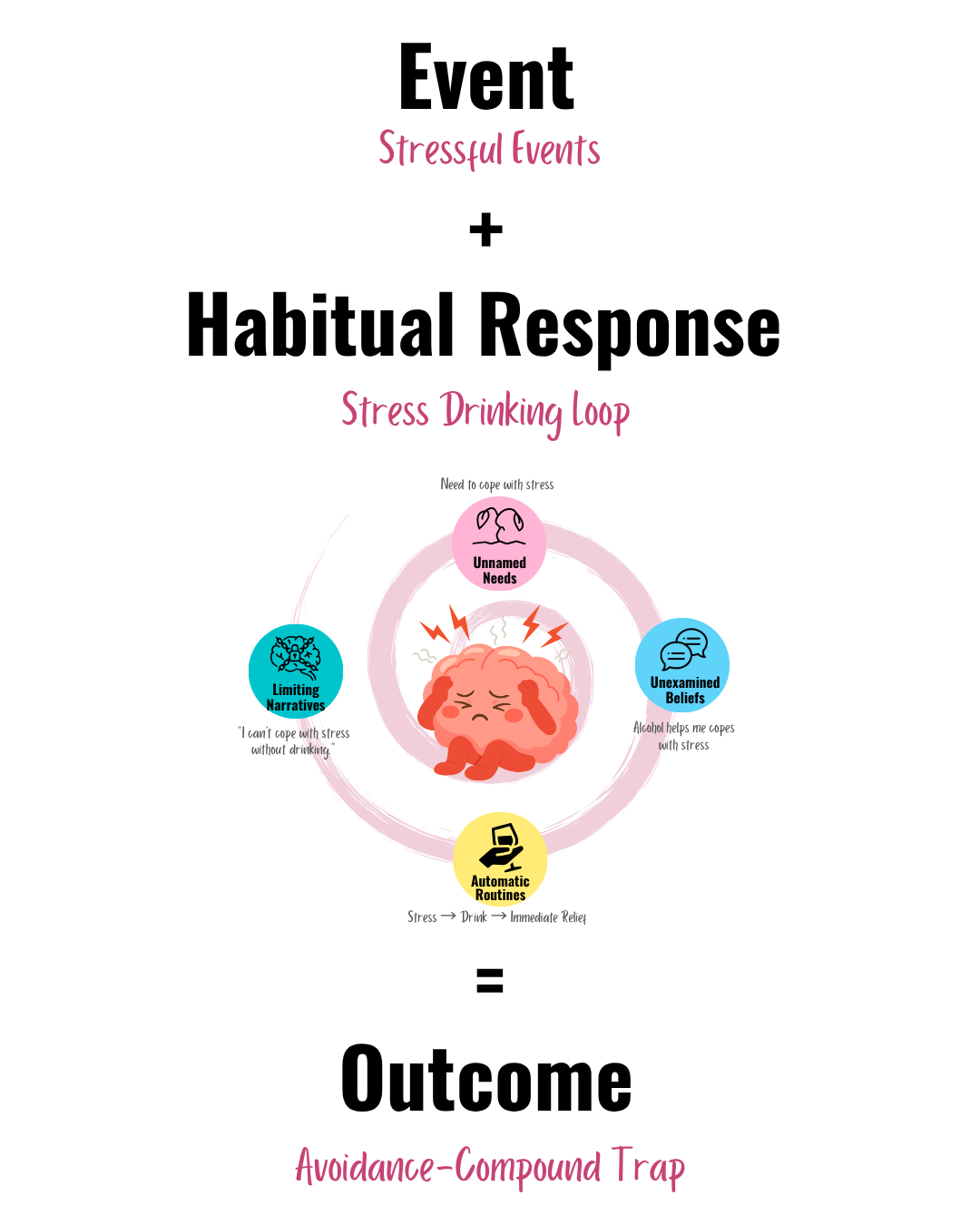
While drinking is often the only visible part of a stress-drinking loop, the loop is fueled and maintained by more than alcohol alone.
Force #1: The Underlying Need to Relieve Stress
Most people who struggle with an unwanted drinking pattern didn’t get stuck because they have a drinking problem, but because they have a drinking solution.
Being stressed is unpleasant, and we are motivated to seek relief from it. However, many of the major sources of stress in our lives cannot be easily removed. When we can’t remove what’s causing the stress, we often look for ways to change how the stress feels instead. Alcohol can offer one such escape by temporarily helping us forget about our stress and experience a sense of relief.
In a Stress-Drinking Loop:
Beneath a stress-drinking loop is the human need to seek relief that keeps pulling us back to the unwanted drinking pattern.
Force #2: The Unexamined Belief That “Alcohol Helps Me Cope with Stress”
Need alone doesn’t create the desire to drink. It’s when an underlying need meets the belief that alcohol can help fulfill that need that turns the underlying need into a desire for alcohol.
Our beliefs around alcohol are formed through our observations and experiences. Before we even had our first drink, many of us had observed others turn to alcohol as a way to cope with stress, sometimes on TV, and other times through people in our lives. Then, we experienced alcohol’s effects firsthand ourselves. At some point, consciously or unconsciously, we form a belief about how alcohol can help us feel less stressed.
In a Stress-Drinking Loop:
The belief that fuels a Stress-Drinking Loop often sounds like “Alcohol helps me relieve stress.”
Force #3: The Habit Loop of Stress, Drinking, and Relief
A need creates the pull, a belief gives birth to the desire, and finally, learning turns it into a reflex.
Our brain learns through results and repetition. When an action gives us the result we want, we tend to repeat the action. Over time, when we repeat the same action in response to the same situation and repeatedly get the same result, a habit loop starts to form. In a well-practiced habit loop, a cue triggers the craving for the result, which drives the associated action. The more practiced the habit loop is, the more automatic this process becomes.
In a Stress-Drinking Loop:
The habit loop often consists of stress as the cue, relief as the desired result, and drinking as the default action that our brain has learned to associate with that result.
Force #4: The Limiting Narrative: “I Can Never Cope With Stress Without Alcohol”
If the first three forces are what create the Drinking Loop and keep it alive, our narrative about what is happening often keeps us further stuck in the loop when we try to break free.
Most of us make sense of our struggle through the lens of the mainstream narrative. Since the mainstream narrative of addiction is riddled with myths and unhelpful information, many of us end up adopting narratives that unintentionally reinforce the very drinking pattern we try to break.
In a Stress-Drinking Loop:
The limiting narrative can look like interpreting the challenges and setbacks in trying to break the old stress-drinking cycle as evidence of one’s lack of ability to ever cope with stress without alcohol.
How Does A Stress-Drinking Loop Worsen Stress Over Time
One problem with drinking to cope with stress is that while it can offer temporary relief in the short run, when drinking becomes our default response to stress, that relief can come with a hidden long-term cost. I call this the Avoidance-Compound Trap.
What is the Avoidance-Compound Trap?
The Avoidance-Compound Trap is an invisible trap that often keeps us stuck in the Stress-Drinking Loop.
While alcohol can temporarily take stress off our minds, it doesn't remove it from our lives. Over time, drinking to cope with stress can compound our stress in three ways:
1. It leaves our initial stress unaddressed and accumulating.
While drinking can temporarily take stress off our minds, it doesn’t remove the source of stress from our lives. As we postpone dealing with life’s challenges, those original stressors can accumulate over time.
2. It can weaken our ability to cope with stress.
Chronic and regular alcohol consumption can interfere with our ability to effectively cope with stress, making stressful situations harder to manage over time.
3. Drinking can become its own source of stress.
As our dependency on alcohol deepens, drinking can begin to create new problems and stressors of its own, adding to the stress we were originally trying to escape.
Over time, we become trapped in a cycle where drinking to relieve stress ultimately creates more stress that requires more drinking to cope.
How to Break a Stress Drinking Loop: A Four-Pillar Approach
Because an unwanted stress-drinking cycle is maintained by more than alcohol alone, to break it, we need to address each of the invisible forces behind the loop.
Pillar #1: Value Alignment
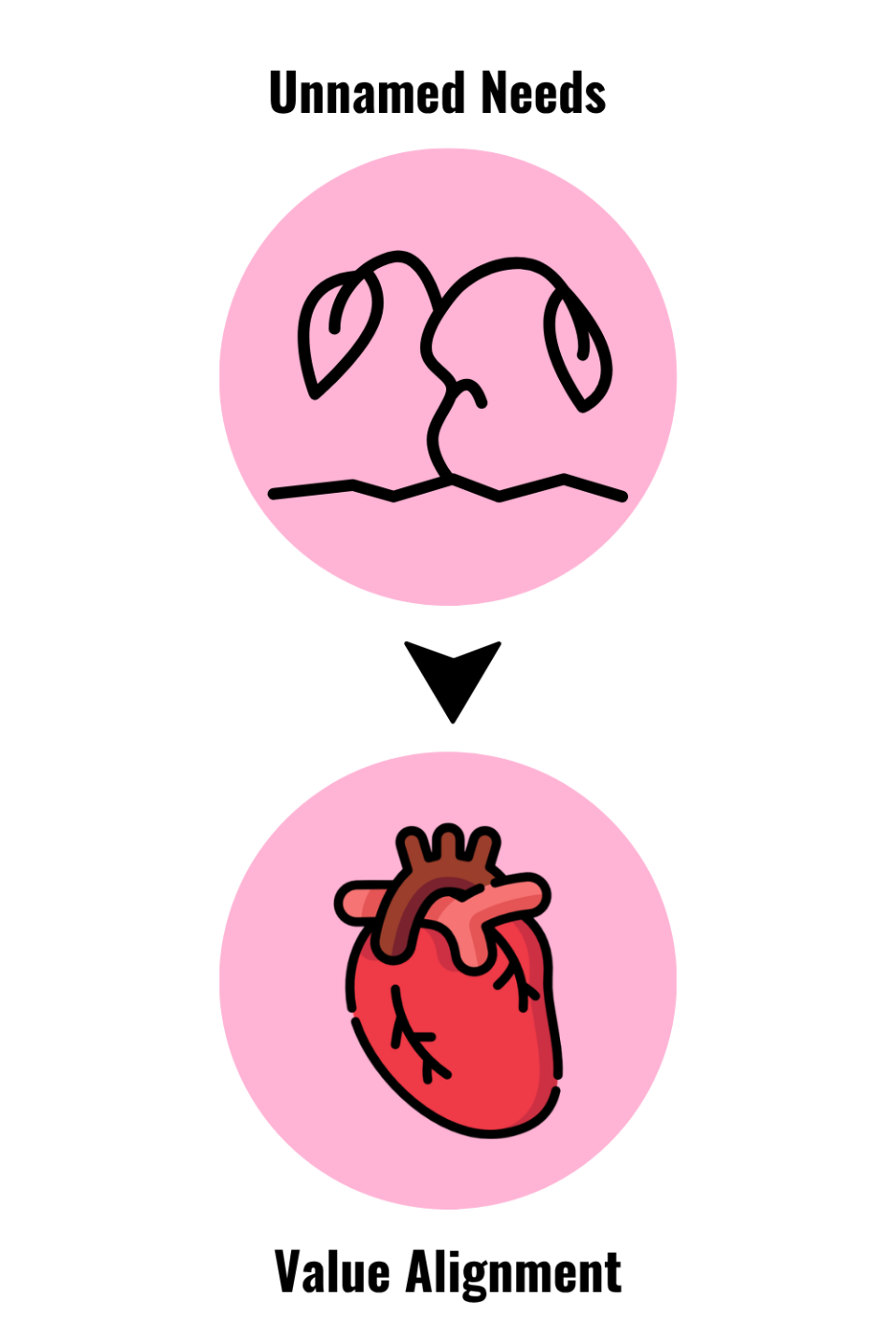
A drinking loop can be hard to resist because alcohol is excellent at fulfilling our immediate needs through instant relief or quick reward.
Rather than trying to deny or fight the pull of our immediate needs, we can widen our focus to include our deeper yearnings and desires. By getting in touch with our personal core values, we give ourselves something meaningful to move toward—not just something immediate to move away from.
Value alignment is about getting in touch with your deepest desires for who you want to be and the life you want to live, and exploring what it looks like to act in ways that both attend to your needs and honor your values.
Pillar #2: Belief Examination
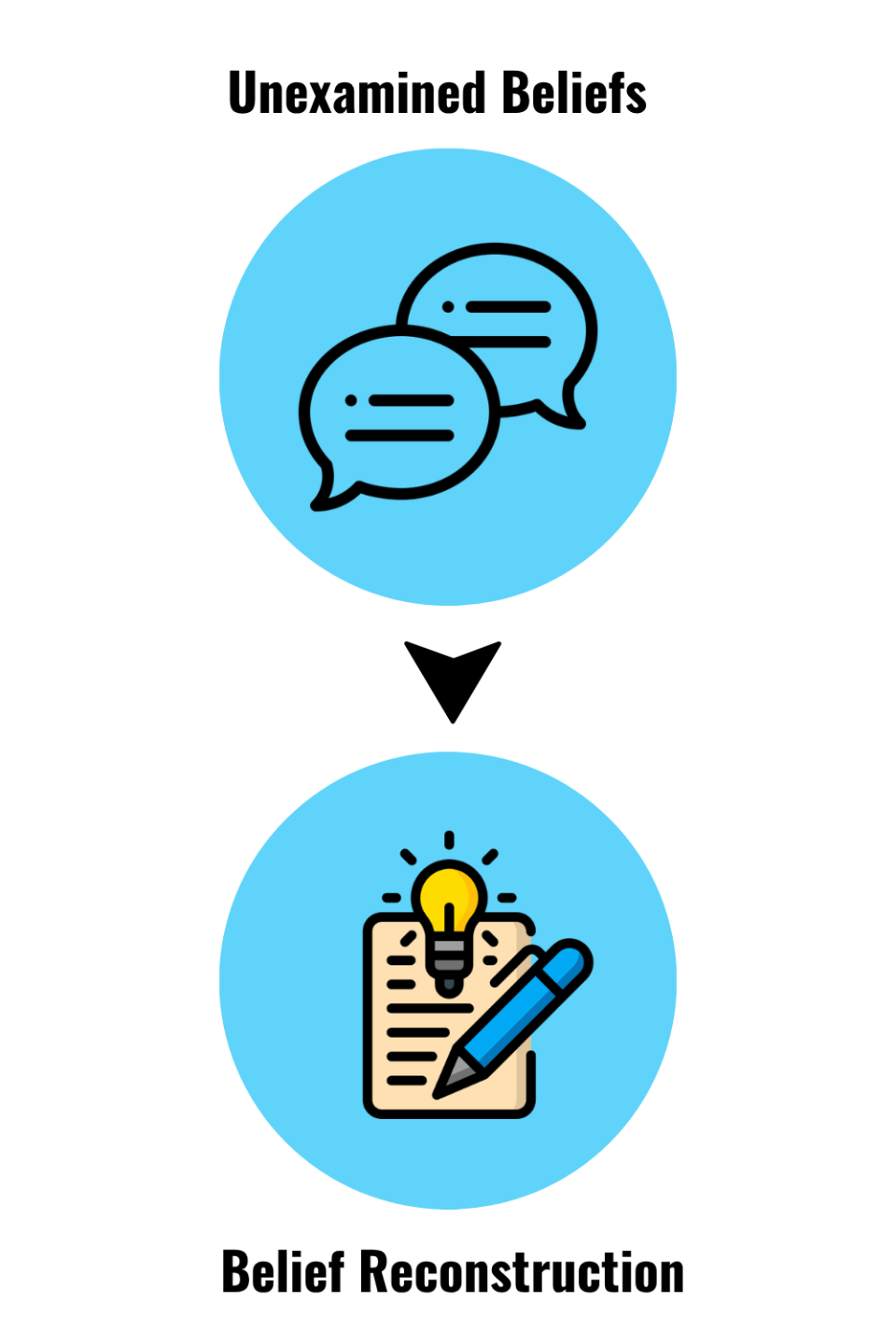
Behind a desire to drink, there is almost always a belief that alcohol can help us in some way.
The good news is that while these beliefs often feel true, many become less absolute when we examine them more closely. Because our desire to drink is fueled by what we believe alcohol can do for us, weakening the belief can also weaken the desire to drink.
Belief Examination is about becoming an investigator of our existing beliefs about alcohol, examining them through facts and evidence, and becoming a more informed consumer when it comes to our relationship with alcohol.
Pillar #3: Skill Expansion
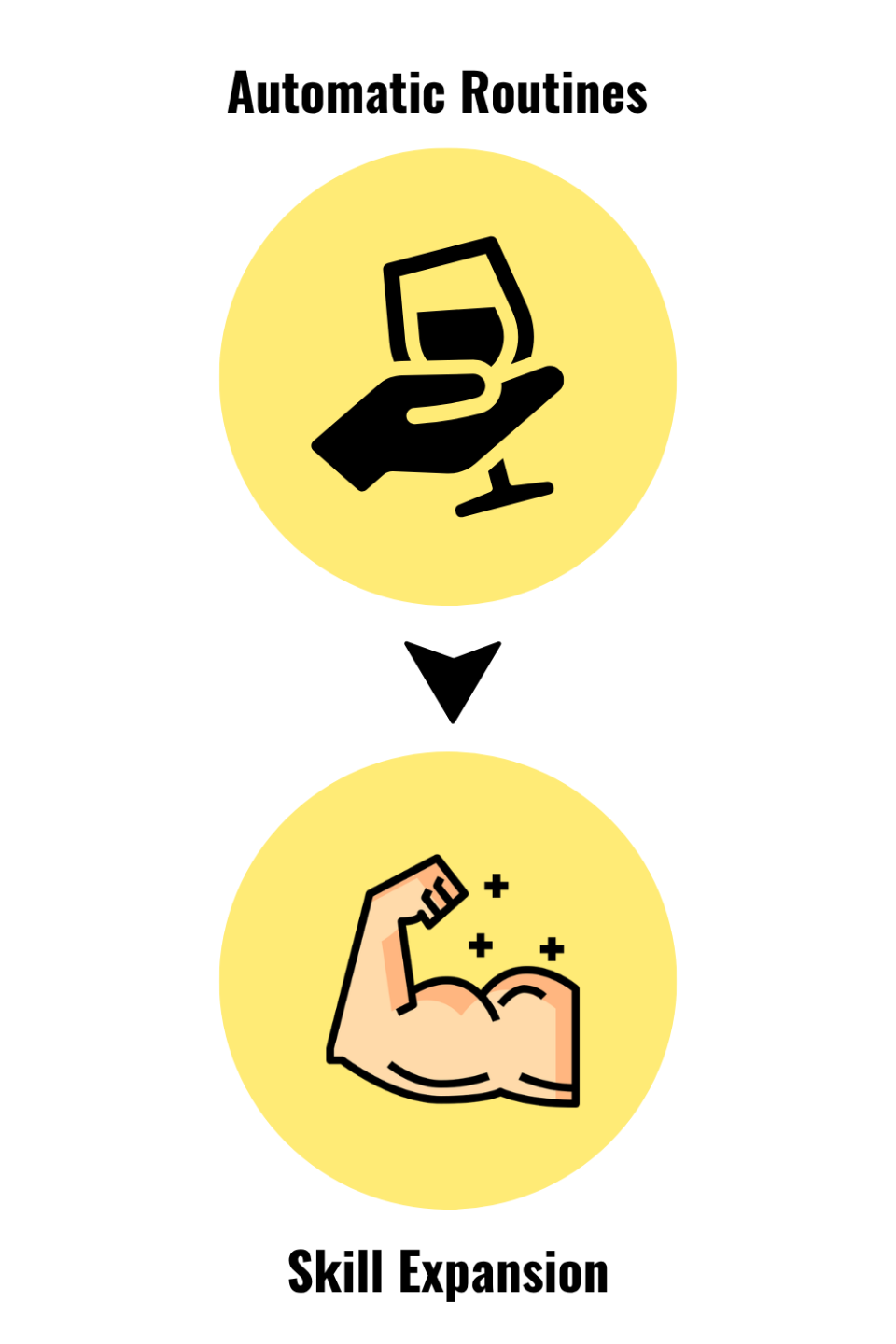
The key to breaking a well-practiced habit loop is to replace the old routine with new responses that can help us achieve what we were seeking from the old routine.
If drinking has been your default routine for coping with certain situations for a long time, there is a good chance that your non-drinking coping skills have become either out of practice or underdeveloped. To truly outgrow an old drinking loop, we need to replace alcohol with new skills and tools that support us in the situations where we once turned to alcohol for help.
Skill expansion is about building new tools and skills that allow us to cope and thrive in life without alcohol.
Pillar #4 Mindset Upgrade
A mindset is an invisible filter through which we see and make sense of our experiences. It shapes how we think, feel, and act, and influences the choices we make. The narratives we unconsciously adopt can become part of that filter, shaping how we interpret our own struggles and what we believe is possible for us.
Mindset Upgrade is the process of intentionally replacing old limiting narratives with new, empowering mindsets that open us to new possibilities for growth and change.
4 Steps To Interrupt a Stress-Drinking Loop
Step 1: Notice the Loop
When you notice the urge to drink while feeling stressed, pause and notice what's happening:
“Hey, it’s the Stress-Drinking Loop.”
By noticing the loop, you’re creating a small pause between the urge and your automatic response.
Step 2: Name the belief
Once you notice the loop, see if you can put the belief fueling the urge into words:
“I want a drink right now because I believe drinking can help me ________.”
By naming the belief, instead of treating the desire to drink as a given, you're identifying what you're expecting alcohol to do for yo
Step 3: Examine the belief
Before acting on the urge to drink, look a little closer at that belief:
What does drinking actually do for me—right now, tomorrow, and over time?
By examining the belief, you're creating a more accurate picture of alcohol's full effects on what you're hoping to achieve—including both the benefits and the costs.
Step 4: Explore another response
Finally, whether or not you give the alternative a try, consider what other options might be available:
What else could I try right now that might help me ________?
By exploring alternatives, you're widening your options rather than treating alcohol as the only way to get what you need.
Looking for a new way to respond to stress?
Check out my Beyond Fight-or-Flight Guide for practical strategies to tap into the power of your stress response.
Frequently Asked Questions About the Stress-Drinking Loop
Why Do People Drink When They Feel Stressed?
Does drinking really help us better cope with stress?
What is a Stress-Drinking Loop?
How does drinking worsen stress over time?
Why do I crave alcohol when I’m stressed?
Why Is It So Hard to Break a Stress Drinking Cycle?
How to Break a Stress Drinking Cycle?
The Invisible Drinking Loop
A New Way to Understand Why People Struggle with Alcohol
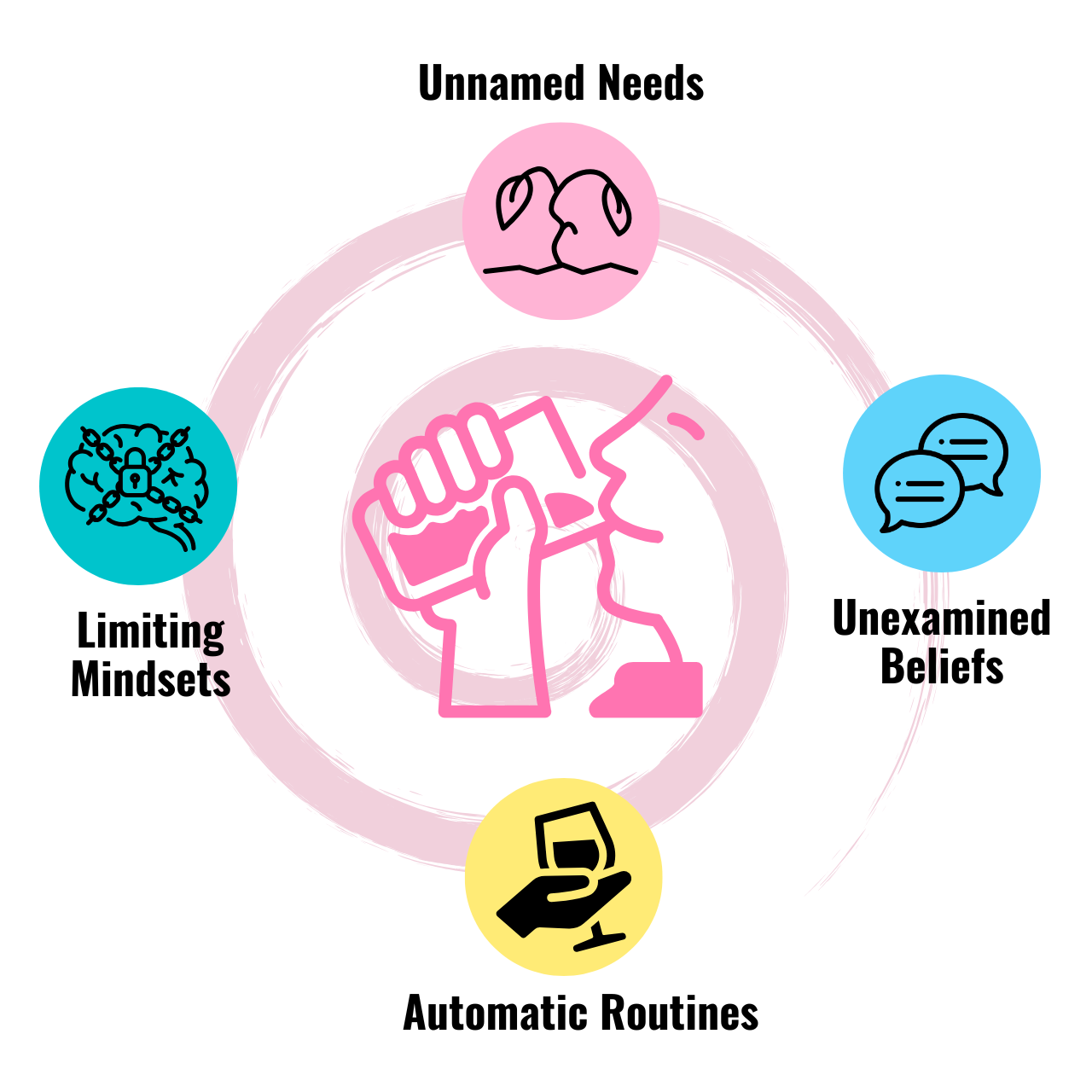
What is the Invisible Drinking Loop?
An invisible drinking loop is a recurring drinking cycle in which drinking begins as an attempt to meet an underlying need.
The cycle is fueled by a belief that alcohol can help with the need in some ways, maintained by a habit loop in which drinking is the default routine, and reinforced by narratives that often hinder growth rather than supporting change.
What Other Common Drinking Loops Keep People Stuck?
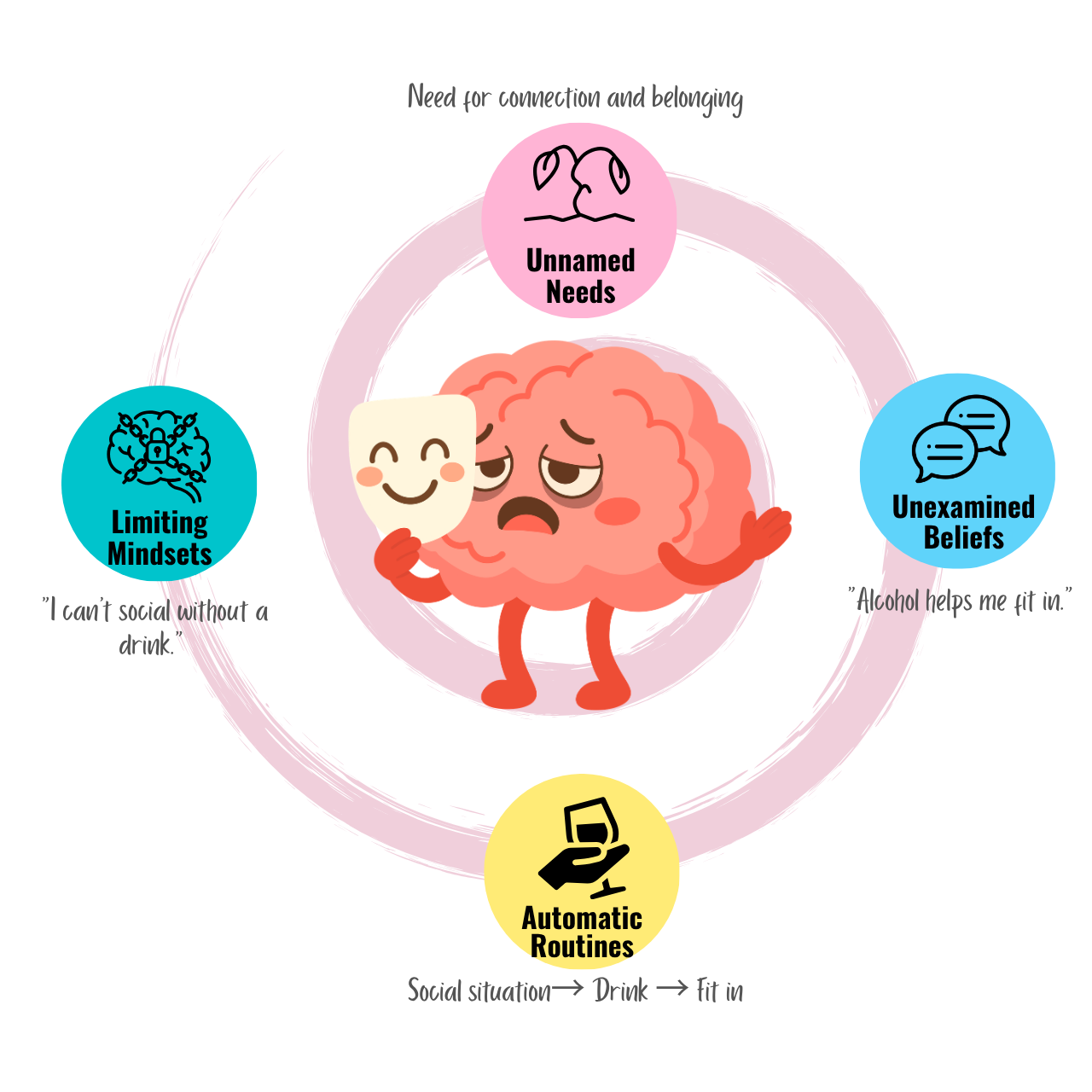
Social-Drinking Loop
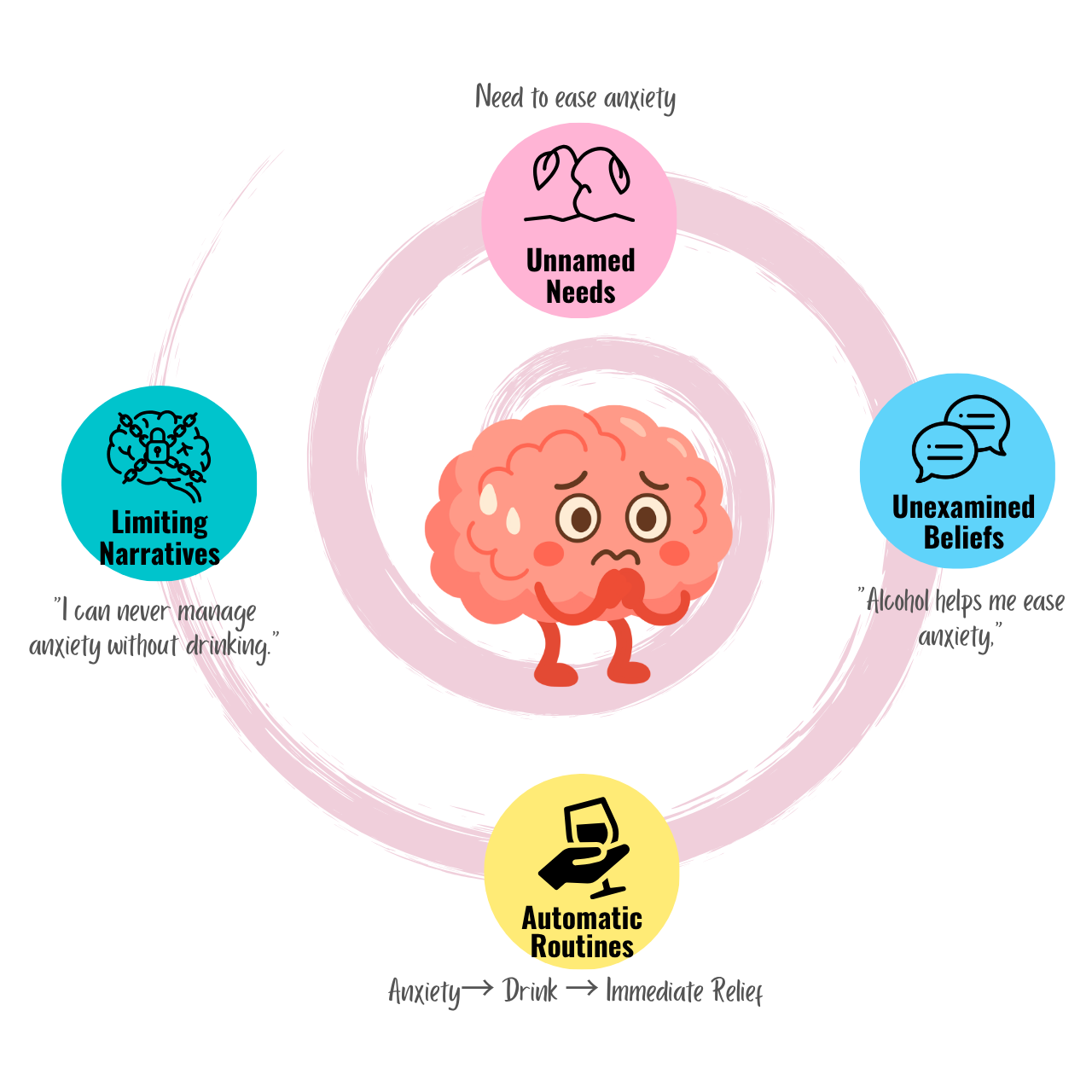
Anxiety-Drinking Loop
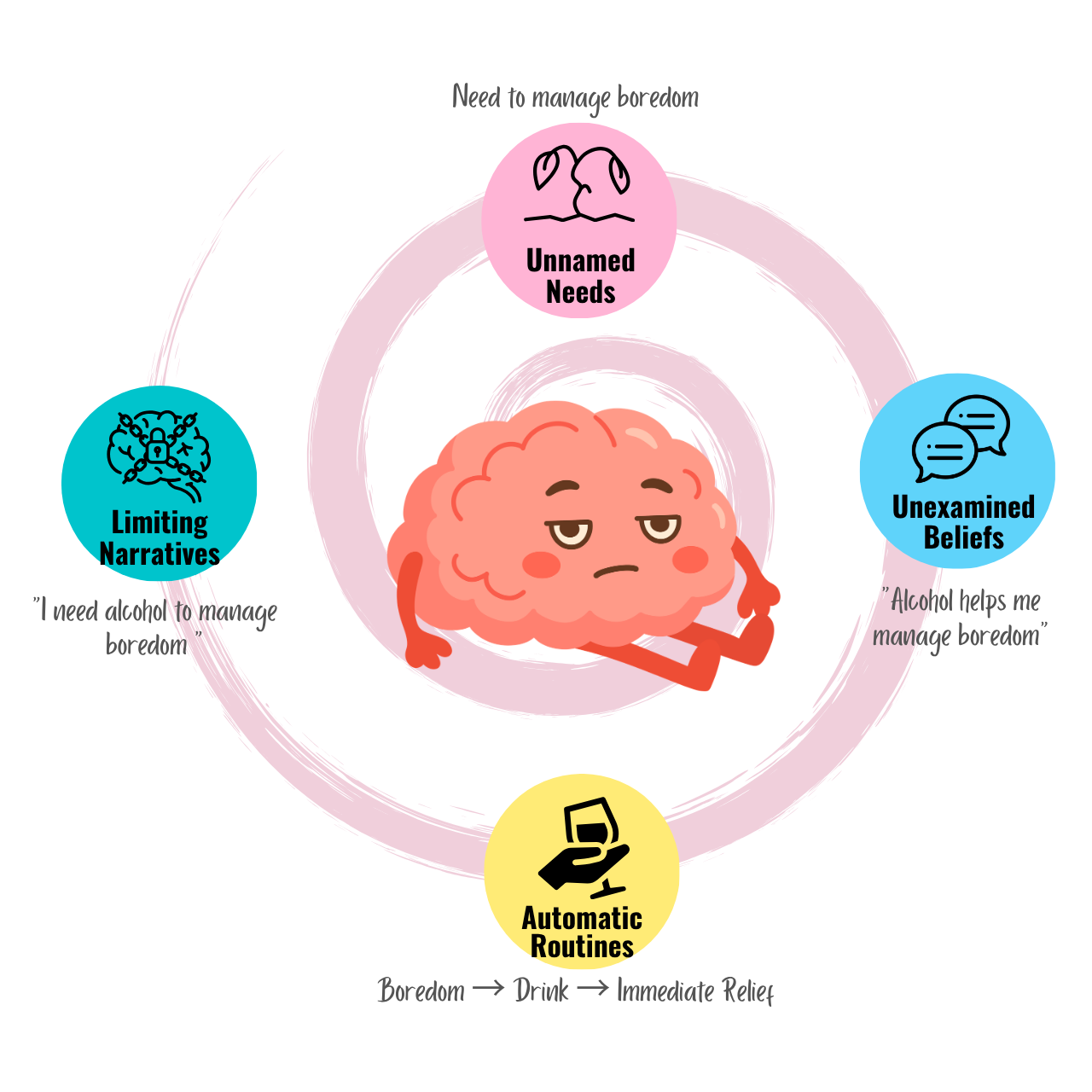
Boredom-Drinking Loop